By Yin Lei
China's new energy enterprises should not only go global but also localize their production in relevant countries to achieve better results, said an expert at the Belt and Road New Energy International Cooperation Forum held in Beijing on Saturday.
At this forum, industry experts and business leaders shared their best practices and proposals on how China's new energy players can further expand and solidify their global presence.
Zhang Shiguo, deputy director of the China New Energy International Alliance, a co-host of the forum, advised China's new energy enterprises to distribute their production capacities globally, instead of sticking to the model of becoming transnational companies. This model no longer works well today due to the uncertainties in the trade and energy policies across the world, he said.
"In the past, we aimed at developing a domestic company into a transnational one by transferring part of its domestic capacities overseas. This resulted in a huge, European or American-style economic system which had once effectively supported this transnational business," Zhang said.
Behind this kind of development, however, risks loomed large. Several years ago, the anti-dumping investigations imposed by the European Union on imported Chinese photovoltaic products dealt a heavy blow to related companies in China. At the end of July this year, India imposed a 25 percent tariff on imported solar cells, including those from China.
Localization may offer an solution. Zhang suggested that the way out for China's new energy companies would lie in a strategy of transfering more production to other countries, a method favored by businesses in Japan and South Korea, which lack the economic hinterland in their home countries.
He stressed that the relocation of production bases to other countries must be accompanied by the efforts to also go local, which means integrating with local resources, and to maintain a long-term presence there.
For companies that go global, collaboration is essential, Zhang pointed out. China's new energy companies are strong in terms of production, quality and technology, but these are not a sure recipe for success. They need to form alliances to complement each other in research and funding, among others.



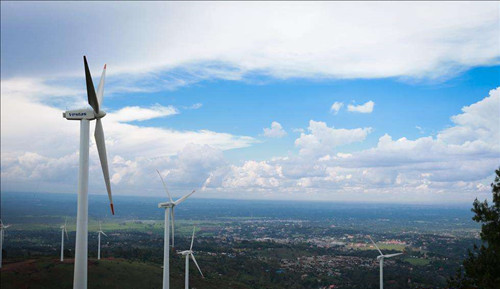
China "undisputed leader" in energy transition: report
Proposal envisions shared energy grid
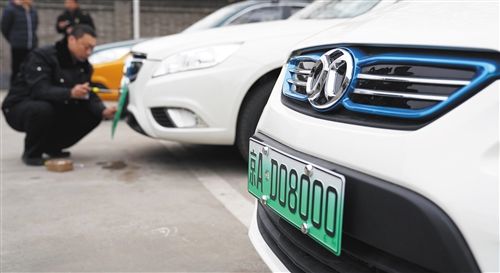
BAIC Group betting big on SUVs, new energy vehicles
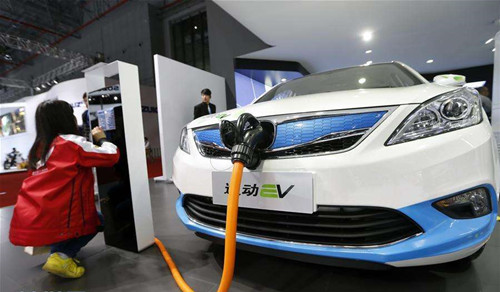
73.5 pct of Chinese consider buying new energy vehicles: survey
AI to enable 30 percent of world’s energy from renewables, says Nobel Prize Laureate

Xiongan creates chances for geothermal energy industry
China's new energy power generation sees faster growth
Brilliance Auto, BAIC Group cooperate on new energy cars